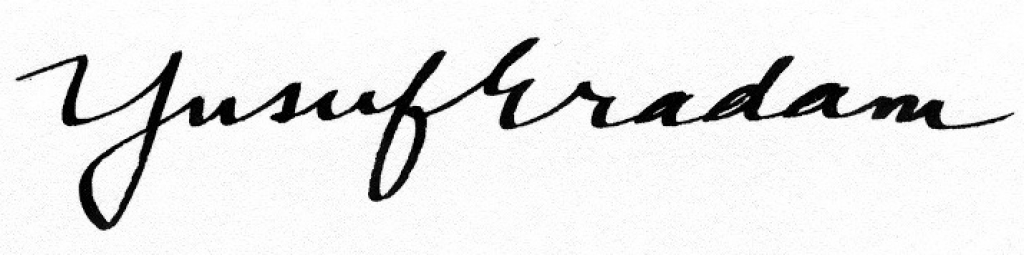
DİRGENDEKİ
TAY
Ben
çabuk öfkeleniyorum, doğru. Gözüm kararmaya görsünmüş ne yaptığımı
bilmezmişim. Babam böyle böbürlenirdi av arkadaşlarına. Haklı.
Bütün bunlar benim yüzümden. Hep ani karar vermemden. Babam. Babam
ellerimi sevmezdi. Küçücükmüş ellerim, kız olacak bir şeymişim.
Babamı nasıl terbiye edeyim ki? Ben kimim ki terbiye edeyim babamı?
Babam. Memleketin en namlı terbiyecisi. Ailem der de başka bir
şey demez babam. Aile fertleri hep omuz omuza olmalıymış, yoksa
o aile un ufak olurmuş, dağılıverirmiş, kurda kuşa yem olmak varmış
Allah göstermesin. Babam, ne zaman birlikte yemek yesek, abilerime,
iki ablama ve özellikle de en küçük oğlan bana işaret parmağını
sallaya sallaya söylerdi böyle. Gerdirme gibidir baba, aileyi
bir arada tutar, derdi. Çiftlik evine parkeciler gelene kadar
bilmezdim “gerdirme” ne demek.
Annem hiç ses çıkarmazdı. Gözlerini babamın ellerinden ayırmazdı
bir süre, sonra da önüne düşen gözlerinden aldığı cesaretle başlardı
çorbayı dağıtmaya, Allahın adıyla başlardı o da işe. Allah bana
göre, babamın işaret parmağının ucuyla annemin gözleri arasında
gidip gelirdi sofrada. Allahı duydum ben o sofrada. Annemin gözlerinden
bana baktı ve dedi ki “alimin oğlu zalim, zalimin oğlu alim olur”.
Babamın işaret parmağı yerinden çıkacak ve annemin gözlerine saplanacakmış
gibi gelirdi. Babamın elleri kocamandı, babamın elleri.
Daha dört yaşındaydım babam Zeytin’i öldürdüğünde. Ben evin yanındaki
derede çimerken duydum Zeytin’in can havliyle havlamasını. Koştum.
Yetişemedim. Babam çoktan Zeytin’i bir erik ağacına asmıştı. Kocamandı
elleri babamın, küreği kürdan gibi rahat kullanırdı. Zeytin’in
başına başına indirirken de rahattı. Al sana itoğlu it! Ben o
çulluğu yakalayacağım diye neler çektim, geber, geber de aklın
başına gelsin. Zeytin’in başından akan kırmızı, Zeytin’in gözlerine
doluyor, oradan bütün gövdesini yıkayıp yerde minicik göl oluyordu.
Çok geçmedi sesi kesildi Zeytin’in. Son çıkardığı ses incecikti,
sanki fısıltıyla “kekiiiiiik” diye bağırıyordu. Kırmızı dolmuş
boğazında “iiiiii” dirgenin paslı dişleri arasında buğday başakları
gibi. Ben gıkımı çıkaramadım çünkü annemin gözlerinden seslenen
Allah, babamın ellerine geçer de oradan bana bir şeyler derse
diye korktum. Ölürüm sandım. Ölüm, babamın kürek gibi ellerindeydi
artık. Babamın Allahı’yla tanışmak istemiyordum. Hem Zeytin’in
ölümüne ben sebep olmadım, bunu biliyorum. Babam yalan söylüyor.
Annemdir, biri elimden çekiştiriyor. Görmeyeyim istiyor annem.
“Patos! Çocuğu da kendine benzetecek ille,” diye fısıldıyor emeteme.
Bana sevdalı bulutların masallarını anlatan emetem de başını önüne
eğiyor. Ben ölüyorum emete. Bana masal anlatsana. Emetemin bağrı
kekik kokuyor. Gözlerim nasıl da ıslatıyor kekiği. Taylığım. Annemin
kadife eli, emetemin kekik bağrı.
Asker eskisi babam seni de öyle terbiye edecek diye öyle korktum
ki. Pamuk helva gibi girmiştin oysa dünyama, rengârenk bayram
balonları gibi, ilk öğretmenimin saçımı okşayışı gibi. İçinde
çimdiğim dere gibi yayıldın içime. Ceylanlar gibi sekerken biliyor
gibiydin, yeni yetme bir delikanlıydın da sanki savaşa gideceğin
emri gelecekti, ufacık bir çocuktun da daha asker celbini alıyordun.
Seni de öyle terbiye edecekler diye öldüm.
Babam bana oyuncak silah alırdı oynayayım diye. Ben bilyalarımla
oynardım. Notak oynardım. Dalya oynardım arkadaşlarımla. Beş taş
oynardım, ip atlardım. Ellerime büyük gelirdi babamın oyuncakları.
Kocaman silah, sicim, olta, tüfek, kırbaç... erkek değil miymişim
yoksa ben? Annem karısı, bu oğlan karışık mıymış?
Ben hep köyün en tatlı dilli çobanının, Ali abinin yanına kaçıyorum.
Ali abi bana bütün koyunların adını sayıyor. Hepsini tanıyor,
hiçbirine vurmuyor. Ali abinin elleri de kocaman ama onun elinde
bir ufacık dal havaya sallayıp duruyor. Koyunları okşuyor dal.
Ali abinin hikâyelerine dalıyorum. Nerde kaldın lan, diye bağırıyor
babam. Kocaman eli yüzüme yüzüme iniyor. Seni de Allah mı yarattı
lan köpoğlu köpek, diyor. Ben emeteme doğru sendeliyorum, emetem
ile annemin aynı anda bana doğru ellerini uzattıklarını görüyorum.
Ben o kocaman elin gücüyle ne yana savrulacağıma karar veremem
ki. Kollarımı kanat gibi sallayarak düşüyorum. Bir uçurtmayım
ben, uçuyorum, ipim babamın elinde. En sevdiğim yemek keşkeği
yaptığımız yere, annemle köy kadınlarının bir araya gelip şepe
yaptıkları tandırın kenar çıkıntısına çarpıyor çenem. Çenemdeki
bu yarık izi oradan kalma.
Babamdır beni böyle korkak, ürkek yetiştiren. Boyun eğmeyi öğrendim
ben. Oysa, ne rüzgardan, ne itin ürümesinden, ne de üstüme başıma
değenlerden ürkecekmişim, yiğit olacakmışım; ben ancak ölümle
yüz yüze gelirsem, ölümü ensemde bu kadar yakın hissedersem hayatta
kalabilirmişim, Hemingway’in boğa güreşlerine merakı bundanmış.
Bayılırmış babam da boğa güreşine. Babam boğa güreşçisi sanırdı
kendini. O bana iş gezileri sırasında İspanya’da gittiği boğa
güreşlerini anlatır, ben boğayı düşünürdüm, ama en çok da atı.
Bayır, çayır, yayla koşturacak, rüzgârla alabildiğine yarışacak
bir at, arenada boğanın bir kaza boynuzuna kurban gidebilirmiş.
Öyle heybetli heybetli dolanırken matadoru ıskalayan boğa onu
kışkırtan matador yardımcılarını taşıyan o zavallı atların karnını
bir darbede deşebilirlermiş de üstündeki canını kurtarabilirse
kurtarırmış. Önce terbiye edil, sonra karnın deşilsin. Erkeklik
zor. Ben erkek olamam. “Oley!” derlermiş boğa matadoru ıskalayınca,
“Oley!” Ben öyle diyemem. Oley diyemem ben.
Ama o eldivenleri de giymekten vazgeçmezdi. O eldivenleri giyince
ben ölürdüm. Duvara dönerdim yüzümü. Görmek istemezdim.
Babamda hikâye çoktu. Neler öğrendim ondan. En büyük, hatta hem
en büyük hem de ilk büyük trajedi kahramanını anlatmaya da bayılırdı
babam. Söyle bakalım pısırık, sabahleyin dört ayaklı, öğlen iki
ayaklı, akşam da üç ayaklı olan şey nedir? He he he, bilemedin
değil mi? İnsan, insan. İlk seferinde bilemedim, sonraları her
soruşunda bir askerin komutanına “Sağol” çekmesi gibi “İnsan!”
diye bağırıyordum, babam da “İnsan yaaa,” diyerek döver gibi başımı
okşardı. Bu insan bilmesini Sfenks sormuş Oedipus’a. Babam kader
diyor, Allahın dediği olur diyor. Tebaili Oedipus da dört ayaklıyken
kahinler demiş bu bebek babasını öldürecek, anasıyla evlenecek
ve çocuklarına kardeş olacak. Kral babası da ölümden korkarmış,
vermiş bebek Oedipus’u bir çobana, git dağlarda öldür, demiş.
Elleri ne kocamandı babamın.
Ama o kırbacı da almaktan vazgeçmezdi. Kırbacını da aldı mı ben
tamam der kulaklarımı tıkardım duvarın önünde. Duymak istemezdim.
Çoban acımış tabii bebeğe. Götürmüş başka bir yerde çocuğu olmayan
bir köylüye vermiş bebeği. Sonra kehanet gerçekleşmiş. Sfenks’in
insan bilmecesinin cevabını bilip de kahraman olan Oedipus kehanetin
gerçekleştiğini ancak ayak bileğindeki izden çoban onu tanıyınca
anlamış. Kim olduğunu ancak o zaman öğrenmiş. İşte böyleymiş.
İnsan ne oldum dememeli, ne olacağım demeliymiş. Sigara yerine
puro içse daha yakışır gibi gelirdi bana. İpleri tutarken kocaman
kocaman eldiven giyerdi yarılmasın elleri diye. Kitap okuyanın
elleri yara bere içinde olmazmış. Babamın elleri sızlardı. Benim
de sızlıyor şimdi ama biliyorum senin ölümüne de ben sebep olmadım.
Babam yalan söyleyemez artık.
Ama o çizmelerini giymekten vazgeçmezdi. O çizmelerini giyince
ben ölür ölür dirilirdim. Dirilmesem keşke derdim. Ölsem. Duvara
dönsem hep.
Seni getirdikleri gün sesine uyandım çiftlikte. Babam daha yeni
gelmiş şehirden. Ben bilmem babamın şehirde ne iş yaptığını. Annem
der bir işler çeviriyor amma... Emmim der Başbakan’ın sağ koludur.
Milletvekilleri bile ondan korkar. Çiftlikte sanki bayram var.
Hem babam gelmiş hem de sen. Sen, dünyadaki en güzel tay. Tay.
O kadar güzeldin ki Tay sana ad koyamadan dellendim ben. “Tay”
olsun o zaman adın senin. Beni affet. Şu yanı başındaki adam,
hala senin iplerini elinde tutan zorbadır, o zorba işte seni bana
vermeyen. Beni sana çok gören. Çok bağırdım, çok yalvardım babama,
hepsine yalvardım seni terbiye etmesinler diye. Ben çok ölüyordum
her tay terbiyesinde. Ancak boynuna kementler, yağlı sicimler
geçince o mağrur edan sona erermiş, toprağı bu dünyanın tek efendisi
benim der gibi arşınlayışın ancak boğulacağını sanırsan bir usluluk
kazanırmış, ancak boynuna geçen sicimler her yandan çekiştirilince...
ancak gözlerin yuvalarından dışarı uğrayınca Tay... ben de çok
uslu bir çocukmuşum, bak herkes beni ne kadar çok seviyormuş,
sen de benim gibi olacakmışsın, uslu ve sevimli. Yoksa asi olurmuşsun,
alır başını gidermişsin, sen soluksuz kalana kadar çekmeleri gerekirmiş
ipi, tay boğmak denirmiş buna. Kötü birşey yokmuş ki bunda, yoksa
deli deli dolaşırmış taylar, uçan bir naylon torbadan bile ürkerlermiş,
ancak ölümle böylesine yüz yüze gelince gerçek at olurlarmış,
ancak soluksuz kalınca, ölümle soluk soluğa burun buruna gelince
ancak...
Babam eldivenlerini giydi. Ben öldüm. Babam kırbacını eline aldı.
Duvar yarılsa da içine girsem dedim. Kulaklarımı tıkamadım bu
sefer. Gözümün önünde gözlerin, incecik ayak bileklerin, seni
gördüğüm anda ben bulutlar arasındaki uçurtmaydım. Yarları, tepeleri
aşardım seninle, ama seninle ancak koparabilirdim ipimi, yoksa
o uçurtmanın uçuşu gibi yalancı uçuş olurdu. İpimin ucu babamın
eldivenli ellerinde Tay. Ben böyle uçmak istemiyorum ki. Bulutlar
bana kopar ipini diyor. Sen de gel ardımızdan diyorlar gidemiyorum,
babam tutuyor ipimi. Sıkıyor sıkıyor. Ellerini uzat, diye bağırıyor.
Koşuyorum. Koşuyorum... ellerimi ileri uzatmışım, yatağımda kan
ter içinde otururken buluyorum kendimi. Gene mi kabus gördün yavrum,
diyor annem, derin derin iç geçiriyor avuç içindeki kınası üstünde
ay kırılan emetem. Emetem yer yatağında öte yana dönüyor, annemin
kadife elleriyle kollarım yorganın altına giriyor. Ay ışığı annemin
buğulu gözleri.
Babam kırbacını da aldı. Ah duymasam o kırbacın sırtına indiğini.
Duymayacağım. Duymadım da.
Çizmelerini giyerken babamı duydum ama. “Ankara’dan getirdiğim
ithal iplerle boğacağız bu sefer çocuklar, ithal işkence ipinden
getirdim.”
Ben işkenceyi biliyorum. Çiftliğin salonuna parke döşeyen ustalar
parkeleri döşedikten sonra lastikli kayış gibi bir şeyle parkeleri
sıkıştırıyorlardı. O ne diye sorduğumda “gerdirme” dedi. “İşkence”
de denirmiş, “cendere” de dendiği olurmuş. Parke parçalarını bir
arada tutmak, dağılmalarını engellemek için bunu yapmak şartmış.
Babam kendini gerdirmeye benzetirdi. Bu aileyi ben tutuyorum bir
arada derdi. Ben olmasam haliniz harap derdi. Babam olmasa ailemiz
dağılırmış, her birimiz yellerde savrulur, kurda kuşa yem olurmuşuz.
Ne severdi bu atasözünü. Kurda kuşa yem olurmuşuz.
Olduk da. Olalım da. Güneş nasıl kavuruyordu o öğlen. Seni terbiye
edeceklerdi Tay. Boynuna geçen ilk kementten sonra gözlerin öyle
büyüdü ki... daha sonra o gözleri Picasso’nun Guernica’sında gördüm.
Sen boynundaki ipi hızla çektin. Koştun, koştun... ben de koştum...
Bu sefer yetişeceğim. Ölürüm yetişmezsem.
Babam, “alın şu boku ayağımın altından, ezilecek!” diye bağırıyor
koşuyordu bir yandan da. Bok benim. Tay, senin aklına nerden geldi
çiftliğin arkasındaki vadiye açılan yara doğru koşmak? Oysa ben
gece denize benzediği şimdi aklıma gelen o vadide seninle birlikte
yıldızlara bakmak isterdim Tay.
Delleniverdim işte. Senin ipini kopartmış uçurtma gibi yardan
aşağı uçtuğunu görünce...
“Tayyy!”
“Tay” ne güzel bir kelime. Söylerken, yüzüne bir gülücük yayılıyor
insanın. Babam o anda attı ithal ipten kemendini ve kocaman elleri
her zamanki gibi mahirdi, sarıverdi kemendi senin o dal gibi narin
boynunu. Gözlerin gene Guernica oldu. Seni yardan yukarı çekmeye
çalışıyordu babam. İthal ip yardan aşağı gerildi gerildi. Gerdirme
baba. O daha tay. Babam yavaş yavaş çekiyor seni. Gözlerin nasıl
oldu öyle. Birazdan birkaç ithal ip daha geçecek boynuna, işkence
yeniden başlayacak. Ellerime baktım. Ufacık lan ellerin senin,
kız elleri gibi! Uzat lan ellerini, uzat da amcalar görsün erkek
eli nasıl olurmuş! Rakı sofrasındaki amcalar ellerime bakacaklar
gene, gülecekler kirli dişleriyle. Kız olacak bir şeymiş bu yav!
Gülerlerdi. Uzat bakiim ellerini!!!!
Ölürüm bu sefer yetişemezsem.
Uzattım. Babamın yarın ucundaki çizmeleri kaydı. Kanatlanıp uçmak
ister gibi sallıyor kollarını babam.
“Tayyy!!!”
Ben istemiyorum ki babam tay boğsun. O kayış gibi sert eldivenleri
giymesin, kırbaç şaklatmasın, çizmeleriyle düşlerimi arşınlamasın.
Sıkıldım, sıkıldık babamın heybetinden. Ah Tay. Ben istedim ki
seni boğmasınlar. Ben istedim ki seni terbiye edemesinler. Sana
da can havliyle kabul ettirsinler istemedim. Ben istedim ki...
Babamla birlikte yardan aşağı tam da üç yol ağzına... Aranızdaki
mesafede ithal ip duruyor. İzi senin boynunda. Babam yerde Sfenks
gibi yatıyor. Başı öne düşmüş Sfenks gibi.
İkisinin de boynu kırılmış, dedi biri. Duydum.
Sen dört ayaklısın, babam ise iki.
Şimdi çok uzaklardayım. Tay boğan, Zeytin öldüren, samanın altından
su yürümüş o illere bir daha dönmem. Anadut memleket. Dirgen.
Üç dişli çatal.
İp atlamıyorum. Annemin kadife elleri üstümde, emetemin kekikli
bağrı aklımda, gözlerin hep gözümün önünde de ondan Tay. Ayaktayım.
Babam tay boğmayı çok severdi. Başka türlü ayakta duramazmış insanoğlu.
FOAL
ON THE PITCHFORK
I easily get upset, true. They say once I lose my temper, I can’t
control myself. That’s how my father used to boast to his hunting
friends. Of course he is right. All this is because of me. It’s
because I make up my mind right away. My father didn’t like my
hands. They were so small, he used to say, I should have been
born a girl. How can I train my father? Who am I to train my father?
My father. The most notorious trainer of our country. He puts
his family first, and then comes the rest. He used to say that,
members of the family should give a hand to one another, or else
the family would fall to pieces, would crumble, would be torn
apart, heaven forbid. That was what my father used to tell my
elder brothers and sisters every time we sat at the supper table,
and me especially, the youngest son, while shaking his forefinger
at me. A father is like a “stretcher”, he keeps the family together,
he would say. I hadn’t known what a stretcher meant until I saw
the men laying the parquet in our farmhouse.
My
mother would not utter a sound. She would keep her eyes on my
father’s hands for a while, then taking courage from her eyes
fixed below, she would start to pass out the soup. My mom would
begin household chores with the name of “Allah”, too. In my eyes,
Allah used to go between the tip of my father’s forefinger and
my mother’s eyes. I heard Allah at that supper table. Allah looked
at me through the eyes of my mother and said “The scholar’s son
becomes a tyrant, the tyrant’s son becomes a scholar”. I thought
that one day my father’s forefinger would come off and stick my
mother in the eyes. My father’s hands were so big, so big they
were.
I
was only four when my father killed “Olive”. While I was swimming
in the creek near our home, I heard Olive wailing. I ran. I couldn’t
get there in time. My father had already hanged him on a big plum
tree. My father’s hands were so big, he could use a shovel as
easily as a toothpick. He wasn’t the least affected as he hit
Olive with the shovel. “There you are, you bloody dog. I take
all the pains to catch that woodcock, and there now, I’ll give
you a good lesson, to hell with you!” The red which was running
down Olive’s head was filling his eyes and washing out his body,
it created a small pool on the earth. Soon Olive was silent. His
last sound was so weak, it was as if he was whispering “thyyyyme”
from his throat filled with red, the “iiii” sounding like the
wheat leaves being crushed between the rusty notches of the pitchfork.
I could not make a sound, I could not, I was afraid that Allah
calling me from my mother’s eyes, would pass on to my father’s
hands and say something to me from there. I thought I would die.
Death was now in my father’s shovellike hands. I didn’t want to
meet my father’s Allah. And I didn’t kill Olive, that I know.
My father is lying.
Someone,
probably my mother, is pulling my hand. She doesn’t want me to
see it. “Patos! He wants the boy to be like him,” she whispers
to my nanny. My nanny, who tells me stories of amourous clouds,
looks down. I am dying, nanny. Tell me a story. My nanny’s bosom
smells of thyme. How do my eyes soak the thyme. My mother’s velvety
hands, my nanny’s thyme-smelling bosom.
I
was so scared that my ex-soldier father would train you the same
way. But you had entered my world like cotton balls, like colorful
festival ballons, like my first teacher’s affectionate strokes.
You expanded in me like the creek I bathed in. It looked like
you knew it while you used to hop around like a deer, it was like
you were a boy waiting for his summons to arrive, you were too
young to recieve military service summons. I died, that you would
receive the same training.
My
father used to get me toy guns to play with. I would play with
my marbles. I would play dahlia. I would play notak with my pals.
I would play five stones and jump rope. My father’s toys were
too big for my hands. Big guns, rope, fishing rod, rifle, horsewhip...
aren’t you a man, he would ask. Hey woman, his mother, is this
boy some sort of a mix?
I
always run to Ali, to the most friendly shepherd in the whole
village. Ali would tell me the names of the sheep. He knows them
all, and never beats them. Ali’s hands are big too, but he only
holds a twig and waves it in the air. The twig strokes the sheep.
I get lost in Ali’s stories. ‘Where have you been, you devil?’
yells my father. His big hand slaps my face. ‘I wonder if Allah
created you, you jerk,’ he says. I stumble towards my nanny, I
see my nanny and my mom hold out their hands. How would I know
which direction I would be tossed away by the force of those big
hands? I fall on the earth, waving my arms in the air. I am a
kite, I fly, my rope in the hands of my father. My jaw hits the
edge of the furnace where my favorite meal “keshkek” is being
cooked, where the village women gather to make “shepe”. That’s
how I got the scar on my jaw.
It
is my father who raised me to be so timid and frightened. I learned
to obey. I should not be afraid of the blowing wind, of the howling
dogs, or of all the threatening things. I should be brave, he
would say, I could survive only when I had felt the breath of
death on my neck. This is why Hemingway was so fond of bull-fighting,
he used to say. My father loved bull-fighting, too. He thought
he was a matador. He would tell me about the bull fights he had
watched during his business trips to Spain, I would think of the
bull, but mostly, of the horse. A horse, who could race with the
wind in the meadows, can be slain by an accidental blow from the
horns of the bull, he used to say. While walking around mightily,
the bull which missed the matador could as well blow up the stomachs
of the poor horses which carry the assistants of the matadors
who infuriate them by prodding the bull with their sticks. Lucky
are those on the horses who could save their lives from those
blows! he would say. First be tamed, then get your stomach burst
out! It’s hard to be a man. I can’t be a man. They would call
out “Ole!”. I can’t say that. I can’t say “Ole!”
And
he would never give up wearing those gloves. I would die when
he put on those gloves. I would turn my face to the wall. I wouldn’t
want to see.
My
father had many stories to tell. I learned so much from him. My
father loved to talk about the greatest tragic hero. “Tell me,
you wimp, what is it that has four legs in the morning, two at
noon, and three in the evening? Ha, ha, can’t guess, right?” Man.
I didn’t know the answer the first time, then later each time
he directed the question at me, I would cry out “Man!”, like a
soldier yelling out “Aye, aye sir!”, to his commander, and my
father would stroke my head roughly. The Sphinx asked Oedipus
this riddle about man. My father says it’s destiny. He says it’s
Allah’s will. When Oedipus of Tebai had four legs, the oracles
said that this baby was going to kill his father, marry his own
mother, and be brother to his own children. His father the King,
who had a fear of dying, gave baby Oedipus to a shepherd and ordered
that the baby be killed on the mountains. How big my father’s
hands were.
And he never gave up using the horsewhip. When he did so, I’d
say “here we go”, cover my ears and turn my face to the wall.
I wouldn’t want to hear.
Pitying the baby, the shepherd gave the baby to a childless couple
in a remote place. And then the omen materialized. Oedipus, who
became a hero when he had answered Sphinx’s riddle correctly only
realized that the omen had taken place when the shepherd recognized
him from the birthmark on his ankle. Only then did he know who
he really was. So that was it. “One musn’t boast about today but
be apprehensive of tomorrow,” my father used to say. I used to
think smoking cigars would suit him better than cigarettes. He
used to wear thick gloves to keep his hands from tearing up when
holding the rope. The hands of those who read books wouldn’t have
corns on them, he would say. My father’s hands ached. My hands
ache now, too but I know that I am not the cause of your death,
either. My father can not lie anymore.
And
he never gave up putting on his boots. When he did so, I would
nearly faint of fear. I wished I would die, I remember telling
myself. Die. And turn my face to the wall forever.
I
woke up to your voice, on that day when they brought you to the
farm. My father had just arrived from town. I don’t know what
he does in town. My mother says he is doing some sort of tricks
there but all the same... My uncle says he is the Prime Minister’s
right hand. Even members of the Parliament are afraid of him.
The farm is filled with joy. Both my father and you have arrived.
You, the most beautiful foal in the world. Foal. You were so beautiful
that I was totally unable to give you a name. So I’ll call you
‘foal’. Please forgive me. It is this man standing next to you,
holding on your ropes, it is this bully who won’t let me have
you. Who thinks I am too much for you. I begged and I yelled,
pleaded with my father, pleaded with them all, not to train you.
I die every time a foal is trained. They say your arrogance can
only disappear when you have those oily ropes and nooses on your
neck. Your trotting around the world with an air of utmost dignity
and grandeur can only be tamed when you think you are going to
be strangled, when the ropes tighten around your neck from all
around... when your eyes pop out Foal. They say I am a very good
boy, too, look how much everybody likes me, you are going to be
like me they say, obedient and cute. Otherwise, they say, you
would be rebellious, you would wander off. They have to tighten
the rope until you are breathless, this is called “foal strangling”
they say. There is no harm in this, they say, or else the foals
run around deliriously, scared of even a plastic bag, they can
only become a real horse when they get so close to death, when
they get breathless, only when they breathlessly feel death on
their necks, they say...
My
father put on his gloves. I died. My father picked up his horsewhip.
I wished I could melt into the wall. I did not cover my ears this
time. I see your eyes, your slim ankles, I was a kite among the
clouds the moment I saw you. I flew over cliffs and hills with
you, but only with you could I free myself from my rope, otherwise
it wouldn’t be flying for real, just like the flying of a kite
isn’t. The end of my rope is in my father’s hands, Foal. This
is not the way I want to fly. The clouds ask me to break off my
ropes. “Follow us,” the clouds say, I can’t, my father holds my
rope. He holds it tighter and tighter. Hold out your hands, he
yells. I run faster and faster... my hands stretched out, I find
myself sitting in my bed soaked in sweat. Did you have another
nightmare my son, says my mother, my nanny, the moon refracting
on her henna stained palms, sighs deeply. My nanny turns to the
other side on the mattress resting on the floor, my arms go under
the quilt with the help of my mom’s velvety hands. The moonlight
is like my mother’s misty eyes.
My
father picked up his horsewhip. If only I couldn’t hear its sound
on your back.
I will not. And I did not.
But I heard my father putting on his boots. “This time we will
strangle you with the ropes I brought from Ankara, boys, I brought
imported torture ropes.”
I
know torture. The floormen who laid the parquet on the floor of
our farmhouse were tightening the wood with a rubberlike belt.
They said this was called “stretching” when I asked about it.
Or “torture”, or “pitchfork”, they had said. It was used to keep
the parquet pieces intact, to prevent them from loosening. My
father used to compare himself to a stretcher. I keep this family
together, he would say. You would all be devastated without me,
he used to say. If not for my father, we would have been scattered
all around, and become food for the birds and the wolves. How
he liked this metaphor. Being food for the birds and the wolves.
We
have. We’d rather be. The sun was so scorching that day. Foal,
you were going to be tamed. With the first noose on your neck,
your eyes popped out... I saw those eyes later in Picasso’s Guernica.
You pulled on the rope on your neck, and started to run, and...
so did I...
This
time I’m going to make it. I’ll die if I don’t.
My
father, screaming “take this shit out of my way, he’s going to
be smashed!”, was running at the same time. I am the shit. Foal,
what made you run to the cliff that opened up to the valley behind
the farm? I would have liked to watch the stars with you in that
valley which at night I now think resembles the sea.
I
got carried away. When I saw you flying down the cliff like a
kite whose rope broke off...
“Foooal!”
“Foal”,
what a lovely word. The mouth gets ready for a smile when you
utter it. My father threw a noose made of the imported rope at
that moment and with his huge hands as competent as ever, he expertly
put the rope around your delicate neck. Your eyes were Guernica
again. My eyes, my eyes were Guernica, too. My father was trying
to pull you up the cliff. Don’t stretch it, Father. He’s just
a foal. My father pulls you up slowly. What has happened to your
eyes? Soon, more imported ropes will be around your neck, the
torture will begin again. I looked at my hands. Your hands are
so small, you jerk, like a girl’s hands! Hold out your hands,
hey guys, see what a man’s hands look like! The men at the rakı
table will look at my hands again, and they will laugh with their
dirty teeth showing. He should have been a girl, man! they would
say and laugh. Lemme see your hands!!!
I’ll
die if I can’t make it this time.
I
held my hands out. My father’s boots on the edge of the cliff
slipped. My father is waving his hands as if he wants to fly .
“Foooal!”
I
don’t want my father to strangle foals. Don’t let him put on those
stiff leathery gloves, don’t let him strike with the whip, or
tread on my dreams with his boots. I have had enough, we have
had enough of my father’s might. Oh, foal. I wanted them not to
tame you, not to teach you to obey. I did not want them to make
you bow down to them, all I wanted was...
Down
the cliff with my father and right on the crossroads... In the
space between you lies the rope. Its mark is still on your neck.
My father lies on the ground like the Sphinx. His head bent down
like the Sphinx.
“Both
have broken their necks,” someone said. I heard him.
You
have four legs, my father has two.
Now
I am far away. I will never return to those sinister lands where
Foals are strangled and Olives are murdered. Motherland. Pitchfork.
The three notched fork.
I
don’t jump rope. My mother’s velvety hands are on me, my nanny’s
thyme-smelling bosom on my mind and your eyes always in front
of my eyes. That’s why, Foal. I have survived.
My
father loved to strangle foals. Otherwise, he said, man can not
survive.
(Translated
by N. Berrin Aksoy)
|